Showing posts with label software. Show all posts

Saturday, 1 June 2013

PayPal denies teenager reward for finding website bug


A 17-year-old German student contends PayPal has denied him a reward for finding a vulnerability in its website.
Robert Kugler said he notified PayPal of the vulnerability on May 19. He said he was informed by email that because he is under 18 years old, he did not qualify for its Bug Bounty Program. He will turn 18 next March.
PayPal, which is owned by auction site eBay, outlines the terms and conditions for its Bug Bounty Program on its website, but does not appear to have an age guideline. PayPal officials did not have an immediate comment.
Many companies such as Google and Facebook have reward programs. The programs are intended to create an incentive for researchers to privately report issues and allow vendors to release fixes before hackers take advantage of flaws.
Facebook pays a minimum of $500 for qualifying bugs, while Google pays from $100 up to $20,000 depending on the severity of the issue. Neither has an age restriction listed on their websites. Microsoft does not pay for security vulnerability information, but instead publicly acknowledges the work. PayPal does not list what it will pay a researcher for a bug.
Kugler is listed as a contributor in a Microsoft list from April of security researchers. He said he received rewards for finding vulnerabilities in the past. Mozilla paid him $1,500 for finding a problem in the Firefox browser last year and $3,000 earlier this year for another bug.
PayPal requires that those reporting bugs have a verified PayPal account. Kugler said he asked PayPal that any bounty be paid into his parent's account.
At minimum, Kugler would like PayPal to acknowledge his finding and send him some documentation "that I can use in a job application," he wrote via email. So far, he hasn't received anything.
The details of the vulnerability, a cross-site scripting flaw (XSS), is posted on Full Disclosure section Seclists.org, a forum for disclosing security vulnerabilities.
An XSS attack occurs when a script drawn from another Web site is allowed to run but should not. The type of flaw can be used to steal information or potentially cause other malicious code to run.

Opera browser for PCs reborn as Opera Next

Opera browser for PCs reborn as Opera Next


The new Opera Next 15 beta is the re-imagined and slimmed-down version of Opera’s desktop browser. This release comes on the heels of the company’s revamp of Opera 14 for Android.
There’s plenty new in Opera Next 15, although some of the changes are in keeping withOpera 14 for Android, which was released last week. Opera 15’s user interface is simpler, with a single bar for URL and searching, like those found on Chrome and Safari. You can turn on the suggestions from the privacy settings and choose among multiple search providers.

The slimmed down Opera Next 15 for desktops

The Speed Dial quick website access feature of Opera 14 has been brought to the desktop and merged with the bookmarks, which now can be found in the top-right corner of the address bar. The mobile version’s Discover feature also made its way onto the new desktop version, with 13 categories in 32 languages of aggregated content for you to browse.
Another feature is the Off-road mode (previously called Turbo), which compresses pages through Opera’s server to reduce their size before they reach your computer. This could be particularly useful when using slow connections or when your laptop is tethered from a smartphone or a MiFi device. However, secure (https) pages don’t get sent through Opera’s proxy.
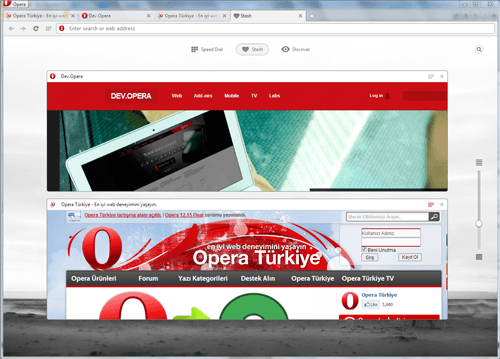
One new and interesting feature is called Stash. It aims to help those who keep countless tabs open in their browser for later reference. This lets you mark a page (via a heart icon) that will be added to the Stash available from the start page.
You are able to see screenshots of all your stashed pages there, as well as adjust them on a grid, depending on how many you have. If you have a lot of stashed items, you can click the search icon in the top right corner of the page.

The Stash feature of Opera Next 15

Besides the exterior changes, a lot has changed under the hood in Opera Next 15. Again, as with the mobile version, Opera dumped its proprietary Presto web page rendering engine and adopted WebKit, the engine used by Apple and Google—but more specifically Blink, Google’s fork of WebKit.
The new desktop and mobile browsers will now be named to reflect the version number of the engine powering the browser. Opera for Android has been given the number 14, while the desktop version is named 15, as it is based on a more recent engine version.

Missing

Opera users will also notice some things missing in Opera Next 15. The M2 email client is not included in the browser anymore. This is to reduce the footprint and memory usage, Opera said, so it has now moved the app in a standalone client called Opera Mail. The new app adds labeling, filtering, threads and multiple tabs.
Opera Next 15 leaves behind its extensions architecture, so Opera 11 and 12’s extension format is no longer supported. Instead, the Chromium extension model is used, and there are tools to convert old extensions. Mouse gestures and keyboard shortcuts are still there, but they are off by default and need enabling from the settings panels if you want to use them.
Opera Next 15 is still in development. However, the company said it would have a fast release cycle, with feature additions and bug fixes based on user feedback.

Five steps to ultimate Firefox security


Over the years, many have touted Mozilla’s Firefox as one of the most secure Web browsers. But as with other browsers, the security level offered depends on the settings. Some security features need to be manually enabled. Those turned on by default should still be double-checked.
Follow these five steps to lock down Firefox. Start with the essentials in the browser’s own settings, then choose some useful add-ons. Finally, keep track of your plug-ins so you can patch the inevitable security holes.

Enable a master password

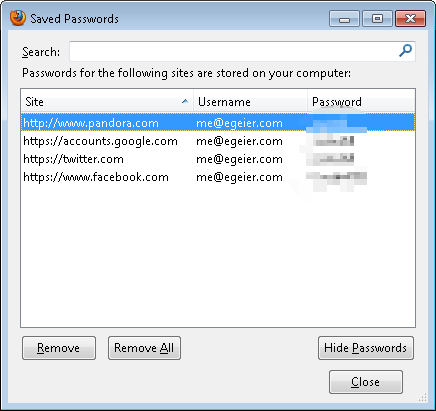
Like other browsers, Firefox by default allows anyone who accesses your computer to log in to sites where you’ve saved the password. And as with Google Chrome, a list of the saved usernames and passwords can be viewed via the Options menu of Firefox.
ERIC GEIER
By default, nothing prevents others from viewing all your saved login info in Firefox.
Fortunately, Firefox offers a master password feature that encrypts and password-protects the saved password list. When enabled, you must enter the master password the first time you use a saved password, once per browser session. Additionally, even though you enter the master password the first time, you must always enter it before you can view saved passwords via the Options menu. This is a great feature to help prevent casual snooping of your passwords. It even prevents most third-party utilities from recovering them.
ERIC GEIER
Creating a master password prevents others from using or viewing your saved login info.
To enable the master password feature, open the Firefox menu, select Options,select the Security tab, and then check theUse a master password option.

Use a strong password for syncing

Like Google Chrome, Firefox has a syncing feature to synchronize your bookmarks, passwords, and other browser data to Firefox browsers running on other computers and devices. Fortunately, Firefox encrypts all synced data, not just your saved passwords (as Google Chrome does). Additionally, Firefox has more security than what Chrome offers by default when you’re setting up a new computer or device to sync. In Firefox, you must log in with your Firefox Sync password. Then you must either enter a random passcode from the new device into one that you've already set up, or take the recovery key from a device you’ve already set up and input that key into the new device.
ERIC GEIER
Syncing conveniently syncs your saved login and other browser data across multiple computers.
So you don’t have much to worry about with Firefox syncing—as long as you use a strong password, one with upper- and lowercase letters, numbers, and special characters. If someone knows or cracks the password, and has access to a device you’ve already set up with syncing, they can then set up other devices with syncing and access your passwords and other browser data.
To enable or change sync settings, open the Firefox menu, select Options, and select the Sync tab.

Verify that security options are enabled

Like other popular browsers, Firefox includes some basic security and privacy settings. Though most are enabled by default, you should ensure they haven’t been disabled.
ERIC GEIER
Make sure the first three security options are selected to protect against malware and phishing attacks.
Start by opening the Firefox menu and selecting Options. In the Options window, select the Security tab. Ensure that the first option, Warn me when sites try to install add-ons, is enabled to help prevent sites from automatically installing add-ons, as some can be dangerous. Then ensure that the next two options, Block reported attack sites and Block reported web forgeries, are also checked to help enable protection against malware and phishing.
ERIC GEIER
Check the first privacy option to help prevent websites from tracking your online activity.
Next, select the Privacy tab. And if you want more privacy online, select the first option, Tell websites I do not want to be tracked, which isn’t enabled by default. Although it can’t prevent all tracking, it will reduce tracking by those sites that support this type of option.
ERIC GEIER
Ensure that the first content option here is enabled to block pop-ups.
Now, select the Content tab. To prevent pop-up windows that can be annoying and even contain phishing ads, ensure that the first option is enabled: Block pop-up windows.
Lastly, select the Advanced tab, select theUpdate subtab, and ensure thatAutomatically install updates is selected.

Use add-ons for more protection

Consider installing these security-related add-ons for extra protection:
NoScript helps you control which sites can use JavaScript, Silverlight, Flash, and other embedded content, as they can be used maliciously to infect your computer or for phishing attempts.
Adblock Plus blocks banners, pop-ups, and video advertisements on websites to reduce clutter and the resulting annoyance; they can even reduce accidentally stumbling upon adware, malware, and phishing attacks.
Web of Trust (WOT) shows the user ratings of sites and blocks dangerous sites—such as those with malware—to increase safe surfing, shopping, and searching on the Web.
HTTPS Finder automatically detects and enforces HTTPS/SSL-encrypted connections when available—great in helping to reduce the chances of an eavesdropper on a Wi-Fi network from capturing your login details.
Xpnd.it! short URL expander allows you to hover over shortened links to see the real URL and other basic information about the site so you know where it leads before clicking.

Check and update plug-ins

Cyber criminals regularly use vulnerabilities in popular browser plug-ins (like Java and Adobe products) to infect and invade computers. Most plug-ins regularly release updates to patch security holes. Many plug-ins are set by default to update automatically or at least to notify you of them. However, it’s a good idea to check periodically for updates. Consider using the Mozilla plug-in checker or third-party sites like Qualys BrowserCheck for updates for other browsers.

A little vigilance goes a long way

Firefox is pretty secure on its own, but you can make it even more secure with the right settings and add-ons. Good password management remains essential, too: Create and enable a strong master password so others can’t use or view your passwords. And if you use the syncing feature to synchronize your passwords and browser data across devices, use a strong password to prevent others from syncing. Finally, keep tabs on your add-ons and plug-ins to make sure they’re giving you the best possible protection.

Wednesday, 29 May 2013

how to Send and Receive WhatsApp Messages on Windows PC


WhatsApp is popular free messaging client which is available for iOS, Android, Nokia and Blackberry, but still we have no client for Windows PC officially released by the WhatsApp team. Well you can imagine having WhatsApp on your PC and how fast you will be able to send and receive text messages as you always be on one device so you can handle everything right there. So we found an unofficial client which is supposed to be a dummy version of Android running on your PC.

BlueStacks App Player Android Emulator

BlueStacks App Player helps you install WhatsApp and thousands other application because its an Android operating system running on your Windows PC. Now obviously its not like you will get that same kind of experience you can do with a touch phone and Android installed on it but still if you are a WhatsApp fan than I must that this software is must for you because WhatsApp experience on this one is simply unbelievable faster texting and media exchanging.
bluestacks-app-player-windows

Steps to Install WhatsApp on BlueStacks App Player

So if you are interested in using WhatsApp right on your PC that you can grab some installation knowledge from below and start experiencing right now.
  • Download BlueStacks App Player for Windows PC.
  • After you have downloaded the above software, start installing it and it will start downloading its package from the internet, it will take some time so sit back and have a cup of coffee.
  • So after downloading it will install and now you will see their user interface, now you have to sign up for your new account or if you already have their account than you can login.
bluestacks-whatsapp-messenger
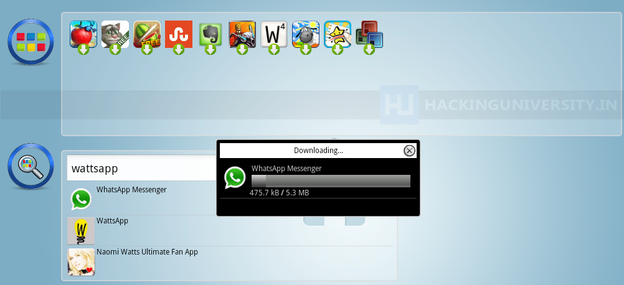
  • Now just search for the WhatsApp like in the above image or find it from the popular downloads hovering right above in the Rocket Dock, after you find it click on it and it will start downloading the app.
  • After WhatsApp is installed click on it and you will see a Terms and Conditions page where you have to click on Agree and than you will be on their main phone verification page.
bluestacks-whatsapp-verification
  • Now just select your country & than insert your mobile number & than click on OK.
bluestacks-whatsapp-verification
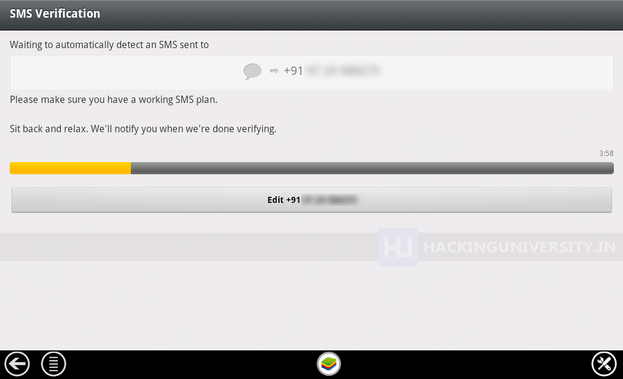
  • Now it will start the process of sending you the verification message on your mobile, if that thing fails you also have an option to call your number for the verification message. So now just insert that code and click on OK boom you have successfully activated your WhatsApp messenger on your Windows PC.
bluestacks-whatsapp-messages
  • So now WhatsApp is ready for some action, select your already created groups, if you were having one on your mobile or you can start sending text or media messages to your friends and create another new group, so I was just messing around my group Wild Hogs, and tried sending some messages and delivery was amazingly fast and responsive.
So now enjoy WhatsApp on your Windows PC with this amazing BlueStacks App Player, well you can also download and install other amazing Android Application which you can search and than download, hope you liked this lengthy tutorial, please share it with all your friends.

11 Uses for an Old PC


You've finally gone and bought a new PC. It has a boatload of memory, lots of cores, and a fast, modern graphics card. But now your old computer sits in a corner, and although you know it's just a machine, it seems to be sulking like a puppy that missed its morning biscuit. It's weird, but you feel guilty with the whole idea of throwing it out.
After all, it's perfectly functional. When you first bought it, it was near state-of-the-art. If your new PC replaces one that's really on its last legs, by all means, take it to a reputable electronics recycler. But it's amazing how many users ditch perfectly good machines when they pick up a shiny new system.
You can do plenty of things with an old PC besides sending it to the recycling heap. Let's take a look at a few ways you might put that old system to work.

1. Convert It Into a NAS or Home Server

If you're running a home network and have multiple users--you, your spouse, your kids--reuse as network-attached storage or even as an actual server may be just the ticket for an old system.
You can turn your old PC into a network-attached storage device with FreeNAS.
However, it's not just a matter of plugging an old PC into a network connection and starting it up. Most desktop systems aren't configured to be effective servers or storage systems. For one thing, they probably use too much power. You'll want to set BIOS power management to run cooling fans in quiet mode, if that option exists. You'll also need to set up the operating system so that it doesn't shut down at inconvenient times, yet run in a low power state when it's not being actively used.
Bear in mind that you'll probably want to run your server "headless" (that is, without a monitor), and sans keyboard and mouse as well. While you'll need a display and input devices for the initial setup, make sure the system will work properly without them. Having a scheduled reboot hang because the system halted during startup (it couldn't find a keyboard, perhaps) is annoying, to say the least.
Also, the operating system is likely not well suited for storage applications, particularly for multiple users. While Windows XP, Vista, or Windows 7 can function well as a storage repository for a couple of users, you'll want to take the time to create user accounts for each person who might need access. In some cases, you may want to set storage quotas.
You could also use Windows Home Server, but it'll cost over $100.
A better solution would be to install a proper network operating system. One choice is Windows Home Server. However, that will cost you somewhat north of $100, and WHS may prefer newer hardware. An alternative is FreeNAS.
FreeNAS is open-source software designed to turn a PC into a network-attached storage device. It's based on FreeBSD, a UNIX variant. If you're uncertain whether you want to commit to an unfamiliar OS, FreeNAS can be downloaded as a LiveCD version. This is an ISO file which, when burned to a CD, will boot off an optical drive and run completely from memory. You can keep your old OS on the hard drive until you determine if FreeNAS is suited to your needs.

2. Donate It to a Local School

If your PC isn't too archaic, consider donating it to a local school or daycare center. Worst case, it could go to the high school computer lab (most schools have one) and be used as a test bed, to take apart and reassemble. Alternatively, the school district computer services group might use it for parts, though it's been my experience that many school district IT groups tend to shy away from used gear, given the unknown pedigree or wear of older hardware.
If you donate it to a daycare or child development center, consider buying some low-cost educational software packages and preinstalling them before handing the system over. Also, as with selling a system, you'll want to remove all software that you've reinstalled on your new PC. And make sure to include all license information for the software you're preinstalling on the old system.

3. Turn It Into an Experimental Box

Try out Ubuntu, the most popular Linux distro. (Image courtesy of Wikimedia Commons.)
You've heard about this Linux thing, and maybe you'd like to give it a whirl. But the thought of trying to create a dual-boot system on your primary PC leaves you a little green around the gills. Now you can experiment to your heart's content on your old box.
Check out Ubuntu, the sexy Linux distro that geeks love to, well, love. The neat thing about Linux is all the built-in support for older hardware, so installation is usually easy. In fact, installing Ubuntu is sometimes simpler than installing Windows. And there's a wealth of free software for Linux just waiting to be tried out.
In Video: How to Install Ubuntu on Any PC
If you think you've got the tech savvy and a bent for tinkering, you might try creating aHackintosh--a PC that can run MacOS X. It can be done, but it does take a fair amount of effort. The main hackintosh site is a good place to start, but expect a long and somewhat bumpy trip. Oh, and you'll have to pony up a few bucks for a legal copy of MacOS X.
In addition, a number of true UNIX-based operating systems are available, ranging from FreeBSD or PC-BSD (based on the Berkeley UNIX version) to OpenSolaris, based on the Sun Microsystems version of UNIX.

Monday, 23 July 2012

Office 2013 on a Tablet vs. Touch-Friendly Competition


With the latest iteration of Office, Microsoft pledges to bring the documents and services you need to run a business to any screen you choose, from a PC to a touch-enabled Windows Surface tablet or Windows 8 Phone. After using the Office 2013 preview suite on a Windows 8 tablet, we are impressed by many of the steps Microsoft has taken to make its Office franchise touchscreen ready and cloud friendly.
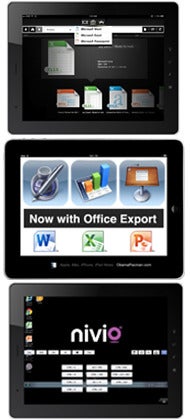
If you're searching for the ultimate mobile-savvy office suite for a tablet, look no further. Compititors available on other platforms, such as DataViz's Docs to Go or Quickoffice and services, including CloudOn, Nivio, Online Desktop and InstallFree Nexus, which deliver virtualized, full-blown versions of Office apps, lack the unified soup-to-nuts office document, collaboration, and editing functionality that Office 2013 delivers.
But you’ll probably have to pay dearly for the no-compromise experience of Office 2013 or Office 365 (the subscription-based software-as-a-service alternative that combines desktop installations with cloud-based access on remote devices). Microsoft hasn't disclosed pricing yet, but it's difficult to imagine a scenario where the subscription fees in the course of a year or two would undercut what they'd charge for a conventional one-time desktop installation.

Comparing Apples to Oranges

Also, we don’t yet know what mobile devices either Office 2013 or Office 365 will support. When asked, Office spokespeople have indicated that some form of Office Mobile (currently available only for Windows Phone) will be forthcoming for Android and iOS devices. But it's highly unlikely we'll see a full-blown version of Office running on the Apple and Google mobile operating systems.
We also have yet to see whether, as Microsoft CEO Steve Ballmer promised, Office 2013 will run as smoothly on an ARM-based tablet running Windows 8 RT (the version of Windows 8 for tablets that aren’t based on x64 or x86 CPUs) as it did on the tablet PC used to show off the suite's new features at Monday's official unveiling of the public beta. The touch optimization was admittedly impressive, but we were witnessing a best-case scenario: Samsung's touch-enabled tablet PC running Office on the desktop version of Windows 8.
For these reasons, affordable if limited mobile productivity suites such as Quickoffice and Docs to Go (both $15 for Android devices and $20 for the iOS version), single-purpose apps such as Apple’s Pages word processor for the iPad ($10), and virtualized cloud services such as Nivio ($15 monthly) remain viable rivals.
Here is a look at how the Office 2013 and Office 365 preview releases measure up the competition.

Local Apps: No Connections Required

Locally installed apps such as DataViz's Documents to Go and Quickoffice have one key advantage over cloud-based alternatives: You don't need to be online to use them. (We don't know whether Microsoft's expected Android and iOS Office products will run offline.) These suites both offer Word, Excel, and PowerPoint support; QuickOffice also lets you save files as PDFs, and read PDF files.

Quickoffice on iPhoneSmartphone Friendly?

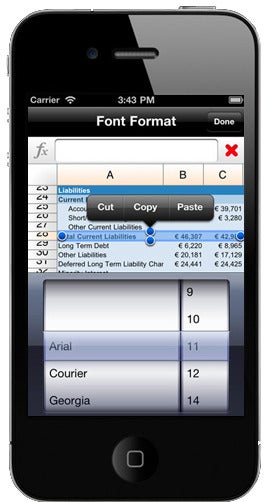
Connectivity issues aside, these mobile productivity apps also run nicely on smartphones since they've been highly optimized for tiny screens. The touch-optimized, gesture-enabled ribbon interface of Office apps, both on desktops and online, wouldn't cut it on an iPhone or Droid. Both Docs to Go and Quickoffice rely heavily on icons that produce pop-up or drop-down menus.

Editing on the Go

Admittedly, the editing options are minimal: In Quickword, for example, you can apply font changes or options such as bolding or italics; format paragraphs, find and replace text, get a word count or print to an AirPrint-enabled printer on an iPad. You can also save your document as a PDF or undo up to a dozen or so edits. Docs to Go lacks printing and PDF support, but otherwise generally offers the same document creation features. Neither app supports spell checking, a limitation that generates a fair amount of grumbling in user forums, much less the fancier features that you get with Office, such as support for tables or image editing, or templates for a range of letters, faxes, pamphlets, and other business documents.

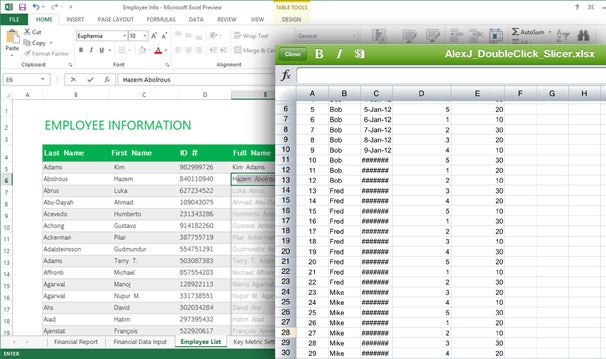
Click to Zoom: Excel on Office 2013 vs. Quickoffice (right)Devils in the Formatting Details

Document fidelity with these apps has greatly improved over the years, but still isn't perfect. On one of my test Excel spreadsheets, Quickoffice did not adjust column width to accommodate a lengthier entry, while Docs to Go did. In general, Quickoffice has the better-looking interface--it shows tabs on Excel workbooks with multiple spreadsheets, and its file management system is intuitive and color-coded (Quickword docs in blue, Quicksheet in green, and Quickpoint--the PowerPoint competitor--in orange). Docs to Go puts its file locations and tools at the bottom of the screen in gray.
But neither app was able to open a complex Excel file involving macros that transfer data to multiple sheets.

Cloud Pleaser?

As for document portability, both Docs to Go and Quickoffice provide good integration with popular online file storage and management services. Both let you access and save files to Google, DropboxBox.net, and SugarSync; Docs to Go additionally supports iDisk, while Quickoffice has support for Evernote, Catch, Huddle, Egnyte and MobileMe. You create these connections in the settings, and thereafter they are easily accessible.
Office 365 Web apps automatically save documents to SkyDrive, as do Office desktop apps that are part of an Office 365 subscription.
Getting files to your desktop isn't quite as straightforward with mobile productivity suites. Docs to Go provides a desktop app that lets you sync the contents of any folders you choose with the mobile app. This works well as long as you don't choose a huge folder to synchronize; by default, Docs to Go sets up an empty My DocsToGo file for this purpose.
Quickoffice has no comparable means of saving to a desktop, but it does offer workarounds. When your mobile device is on the same Wi-Fi network, you can access and upload files using a desktop browser by typing in the URL shown in the app's home screen. You can also mount the device as a network drive (using the same URL). With iOS devices, you can use iTunes to synchronize files.
Docs to Go and QuickOffice aren’t the only mobile productivity suites (ThinkFree Mobile for Android comes to mind), but they are the top ones that run on both Android and iOS tablets.

Stand-alone Apps

Not everyone deals with the range of documents supported in most office suites. If you only care about word processing, for example, Apple’s Pages is an excellent app for the iPad. Apple also offers a spreadsheet app, Numbers, and a presentation app, Keynote, for the iPad.
Android tablet owners have access to a large number of stand-alone productivity apps, many of them free.

Virtualized Office in the Cloud

A growing number of tablet users, however, are passing up locally installed apps in favor of the new virtual Office services. With CloudOnNivio, and Onlive Desktop, you install an Android or iOS app to which the service basically streams the user interface of full-blown Office apps running in the cloud. At its best, the experience feels no different from working on a desktop program.
You don't even need to install an app to have similar functionality from InstallFree's Nexus, which runs in any browser.
File management is an issue with some of these services--you want to avoid uploading and downloading documents if at all possible. CloudOn handles this by integrating with some of the same popular file storage services supported by Docs to Go and QuickOffice, including Box.net, DropBox, and Google Drive.
Installfree Nexus not only lets you seamlessly save to a variety of storage services, it sees them as network resources when you're creating a document. So, for example, if you want to insert an image stored on, say, Box.net, you can navigate to the site, select and download it without leaving Nexus.
Of course, these services don't work at all offline, and require decent broadband to work smoothly online. And the big (mostly unanswered) outstanding question for some of these apps is what they will cost. Almost certainly it will be some sort of subscription fee, since the services must pay Microsoft licensing fees for hosted versions of Office. InstallFree Nexus, for example, says it plans to offer monthly licenses for $20 (or $5 for academic users).

Microsoft Gives Android and iOS a Cold Shoulder

People who invest in Microsoft tablets may not need to bother with these services, since they'll be able to run the new and improved Office Web apps for free, even if they don't subscribe to Office. But at this writing, the free Web apps aren't an option for iOS or Android tablets: You can see your SkyDrive documents, but you can't edit them.
Should Microsoft decide to open up the free Web apps to mobile browsers on non-Microsoft operating systems, the competitive landscape could change dramatically. At Monday’s Office 2013 and Office 365 launch, a Microsoft representative hinted that an announcement on browser support would be forthcoming in the months to come, so this story is by no means finished.

Microsoft Clarifies Office 365 Access for Macs


Saying that a spokeswoman "misunderstood" questions fromComputerworld, Microsoft has backtracked and confirmed that Mac owners who subscribe to the upcoming Office 365 Home Premium will be able to acquire Office for Mac 2011 as part of their subscription plan.
Previously, the company had said that Mac owners would have to purchase Office for Mac 2011 separately -- at list prices starting at $120 -- but could link a copy of the suite to their Office 365 subscription plan for some basic file sharing functionality.
Computerworld had posed two scenarios to Microsoft: One in which users would be able to download Office for Mac 2011 free of charge as part of their Office 365 plan, the second where users had to buy the Mac suite separately.
Microsoft picked the second.
Now, the company is trying to clarify how things will work.
"The final version of Office 365 Home Premium, when available, will include Office for Mac as an option of the five devices," Microsoft said in a statement. "Macs could be all five of the devices if the subscriber chooses, and at no additional cost."

New Versions Unveiled

Earlier this week, Microsoft introduced previews of Office 365, including an edition named Home Premium aimed at consumers. Office 365 Home Premium will primarily target Windows users who want Office 2013. Customers who subscribe to Office 365 will be able to install and run Office 2013 on up to five devices, which Microsoft defined as PCs -- desktops and laptops -- and tablets running Windows 7 or Windows 8.
Windows 8 will ship October 26.
Microsoft CEO Steve Ballmer introduces the updates.
With the addition of Office for Mac to the mix, consumers with a heterogeneous household -- a few Macs, a few PCs, but no more than five -- all can run Office for one monthly or annual payment.
According to fact sheets published by Microsoft, the business-oriented Office 365 plans will also include access to Office for Mac as part of the five-per-user device/copy limit.
Office for Mac 2011 will receive an update at the launch of the new Windows edition, Office 2013, that allows it to be counted toward the five-install limit. Microsoft has not set the on-sale date for Office 365 Home Premium, or any of the other subscription plans, but speculation seems to be collecting around late January or early February of next year.
However, Office for Mac 2011 and Office 2013 will not be equivalent in features or even applications. The latter consists of not only Excel, Outlook, PowerPoint and Word -- the four apps in the highest-priced Office for Mac -- but also Access, OneNote and Publisher.
Because Microsoft has not disclosed the subscription price for Office 365 Home Premium, it's impossible to tell whether the inclusion of Office for Mac is a good deal for Mac owners.

License Options

Microsoft now prices a perpetual license three-pack of Office for Mac Home & Student 2011 (which lacks Outlook) at $150 list, which can be installed on up to three Macs. Office for Mac Home & Business 2011 costs $280 for a two-license edition.
Retail prices are lower: Amazon.com, for example, sells the three-license version of Office for Mac Home & Student 2011 for $99.46 and the two-pack of Office for Mac Home & Business 2011 for $212.24.

Microsoft declined to say how it will price the traditional single- or multi-license versions of Office for Mac when it offers the OS X suite as an Office 365 choice. If prices remain the same and Office 365 costs more than a few dollars a month, it may be cheaper to keep buying the Mac suite as a boxed copy or download, not as part of a subscription.
Windows 7 and Windows 8 Release Preview users can now try the Customer Preview of Office 365 Home Premium, and other plans targeting businesses, by beginning at a Microsoft portal. Mac users cannot participatez.